
When deploying an FTTH network with pre-connectorized ODN, can subscribers simply plug in their devices to get onboard? The answer is no. A case study of Millennium suggested, in an Illinois state-subsidized broadband project, “several hundred homes covered had to be built with every customer manually spliced in, because no preterminated, hardened connector drop cable was available.” As the industry started to employ pre-connectorized solutions, such inefficiency is quite common. When upgrading their networks, customers tend to treat pre-connectorized products as plug-and-play gadgets compatible with all scenarios. This is a misunderstanding to both pre-terminated products as well as the systemic business solutions in behind. The essence of pre-connectorization is to shift the labor-intensive work, such as splice fusion and end-face preparation, from project sites back to the manufacture’s factory, and thereby reducing the operator’s labor cost. However, that reduction comes at a price – the systemic planning backed by rigorous data collection and sufficient communication with solution providers beforehand. The project’s budget can be trimmed, but not the time and efforts ought to be spent.

CONNECTORS AND PATCH CORDS
The connector and its cable assembly should be specified together. For an outdoor connection, the optical interface, locking mechanism and environmental protection all need to match; “pre-connectorized” alone is not a compatibility specification. The two ends of the cable also need separate consideration: a hardened connector may be required at the outdoor terminal, while a standard SC connector serves the protected premises-side connection. Whether the cable is terminated at one end or both matters, too – a single-ended drop can simplify connection at the terminal while still requiring a splice at the other end.
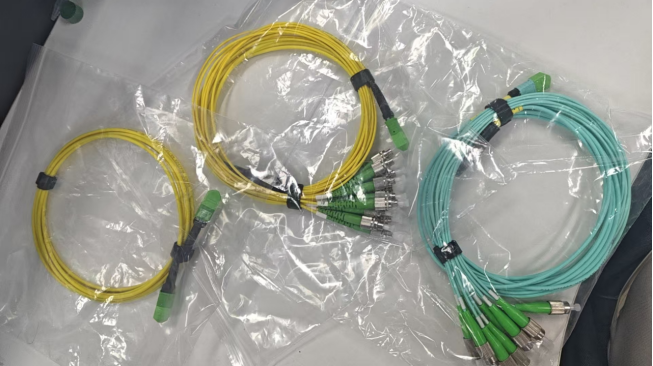
The next decision is cable’s length. Factory pre-terminated drops are supplied in defined lengths, so route measurements must inform the order rather than be left entirely to the installation crew. Before purchasing terminals in volume, the project team should therefore agree on the matching cable assemblies: the connector at each end, the cable construction, the required lengths and the quantities. This turns a connector selection into a usable material specification—and reduces the risk of having the right port without the cable needed to use it.
MATERIAL PLANNING AND STAGING
Once the components are specified, they need to be organized around the construction schedule. The bill of materials (BOM) should identify what each work area requires—not only terminals and cable assemblies, but also the mounting brackets, cable clamps and sealing accessories needed to complete the installation. Confirm which parts are included with the main products and which must be ordered separately. Use that list to prepare installation kits by area or task, so crews receive the components together rather than sort through bulk shipments on site.
Delivery dates should follow the sequence of work, with supplier lead times checked before crews are scheduled. Long-lead items need early commitments, while agreed buffer stock can cover critical components without requiring the entire project’s materials to be stored on site at once. Keep replenishment tied to the approved specifications, too: if a shortage requires a substitute, verify its compatibility and obtain approval before dispatch – not after it reaches the installer. The practical goal is straightforward: when a crew starts a job, the complete set of approved materials should already be available.
CONNECTION AND HANDOVER
Factory termination does not remove the need for careful handling on site. Before mating, inspect the connector end faces, clean them where necessary and inspect again; a protective cap does not guarantee that the surface underneath is clean. Follow the manufacturer’s instructions for alignment, locking and sealing, then secure the cable and store any excess length without exceeding its bend-radius limits. Keep unused connectors and ports capped until they are needed. These checks should be part of the installation procedure, with the appropriate inspection and cleaning tools available to the crew.
Handover should confirm both that the installed link meets the agreed requirements and that its records match the actual connections. Before construction starts, agree on the field tests, acceptance limits and documents required – not simply whether factory test reports will be supplied. After installation, verify fiber continuity and measure link loss against the approved loss budget; include OTDR testing where the project requires it. Record the results against the corresponding cable and port identifiers, and update the drawings to reflect any changes made during construction. The receiving team should be able to identify each connection and retrieve its test results without having to ask the original installer.
CQT’S APPROACH
CQT provides a wide range products covering the feeder, distribution and subscriber connection sections, including distribution hubs, splice closures, terminal boxes, optical cables, connectors and pre-terminated drop assemblies. This coverage allows project teams to procure the terminal, cables and the surrounding hardware in one stop. Where standard products do not fit, customization can address connector interfaces, port arrangements, cable entries, mounting structures and internal component layouts, with the scope, cost and lead time agreed before production.