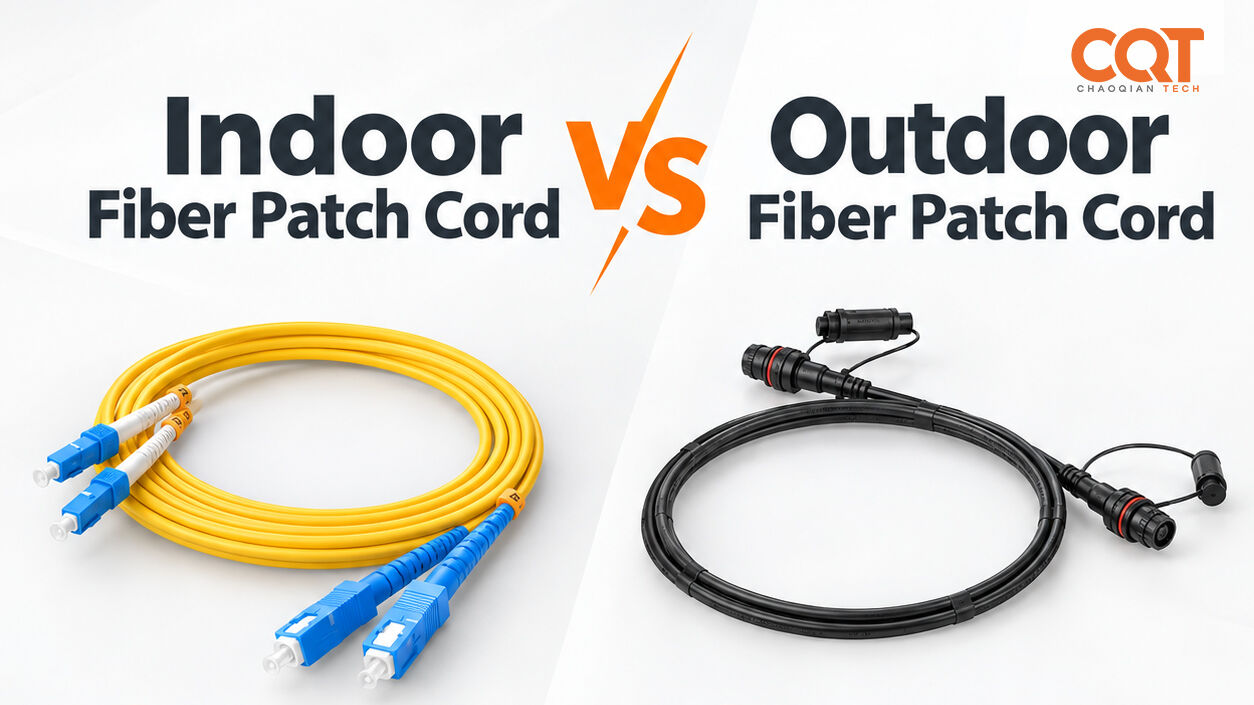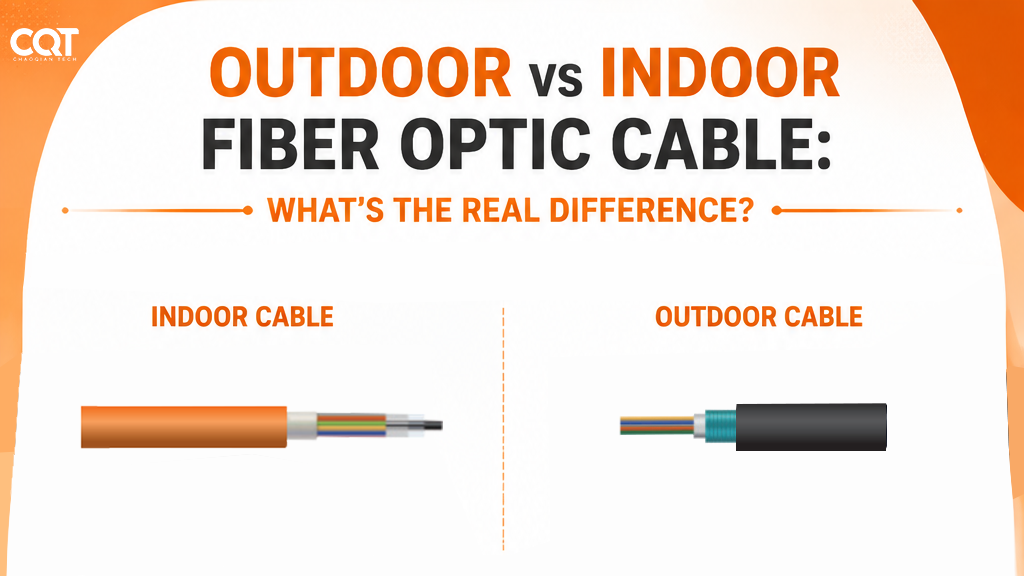
At first glance, indoor and outdoor fiber optic patch cords may seem largely the same, but in reality, they are designed for different installation environments.
Choosing the wrong type can affect the service life of the fiber connection, mechanical reliability, and the long-term stability of the entire network.
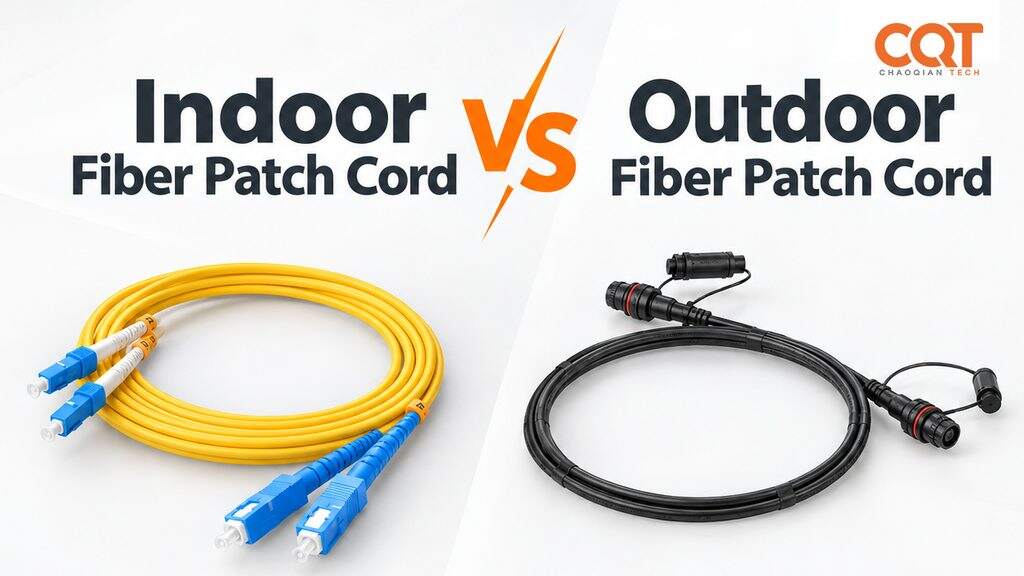
So, what exactly is the difference between outdoor fiber optic patch cords and indoor fiber optic patch cords?
1. Their Respective Characteristics
Indoor fiber optic cables do not prioritize waterproofing or dustproofing; their core focus is fire safety and flexible, easy routing.
Outdoor fiber optic cables typically offer waterproof, dustproof, moisture-proof, UV-resistant, high- and low-temperature resistant, and corrosion-resistant performance, with protection ratings up to IP67/IP68. Armored types also provide tensile strength, compressive strength, and resistance to rodent bites.
2. Different Environmental Requirements
The biggest difference between the two lies in their different operating environments.
Indoor fiber optic patch cords are mainly used in relatively controlled environments, such as:
1) Data centers
2) Server rooms
3) Communications equipment rooms
4) ODF optical distribution frames
5) Offices and indoor communications cabinets
These environments are typically shielded from direct sunlight, rain, extreme temperature fluctuations, and significant mechanical impact.
Outdoor fiber optic patch cords, on the other hand, may need to withstand long-term exposure to:
1) Direct sunlight and ultraviolet radiation
2) Rain, moisture, and water vapor
3) High and low temperatures
4) Dust and dirt
5) Wind and mechanical stress
6) Frequent temperature changes
Therefore, outdoor fiber optic patch cords generally require greater environmental adaptability.
3. Differences in Jacket Materials
The cable jacket material is one of the important differences between the two.
Indoor fiber optic patch cords typically use materials such as PVC or LSZH, depending on the application scenario and fire safety requirements. These materials generally balance flexibility with ease of indoor installation.
Outdoor fiber optic patch cords, however, require better UV resistance, moisture resistance, abrasion resistance, and temperature resistance.
Therefore, depending on the product structure and application scenario, outdoor fiber optic patch cords may use PE, TPU, or other materials better suited to outdoor environments.
4. Mechanical Structure
Indoor fiber optic patch cords are usually installed between cabinets, distribution frames, or equipment, where the routing environment is relatively stable. Therefore, their structural design mainly balances flexibility and ease of installation.
The outdoor environment is different. Outdoor fiber optic cables typically offer waterproof, dustproof, moisture-proof, UV-resistant, high- and low-temperature resistant, and corrosion-resistant performance, with protection ratings up to IP67/IP68. Armored types also provide tensile strength, compressive strength, and resistance to rodent bites. During fiber laying, conduit installation, bending, and equipment connection, the cable may be subjected to significant pulling force, bending, and friction. Therefore, outdoor fiber optic patch cords usually adopt stronger reinforcement structures.
Common reinforcement methods include:
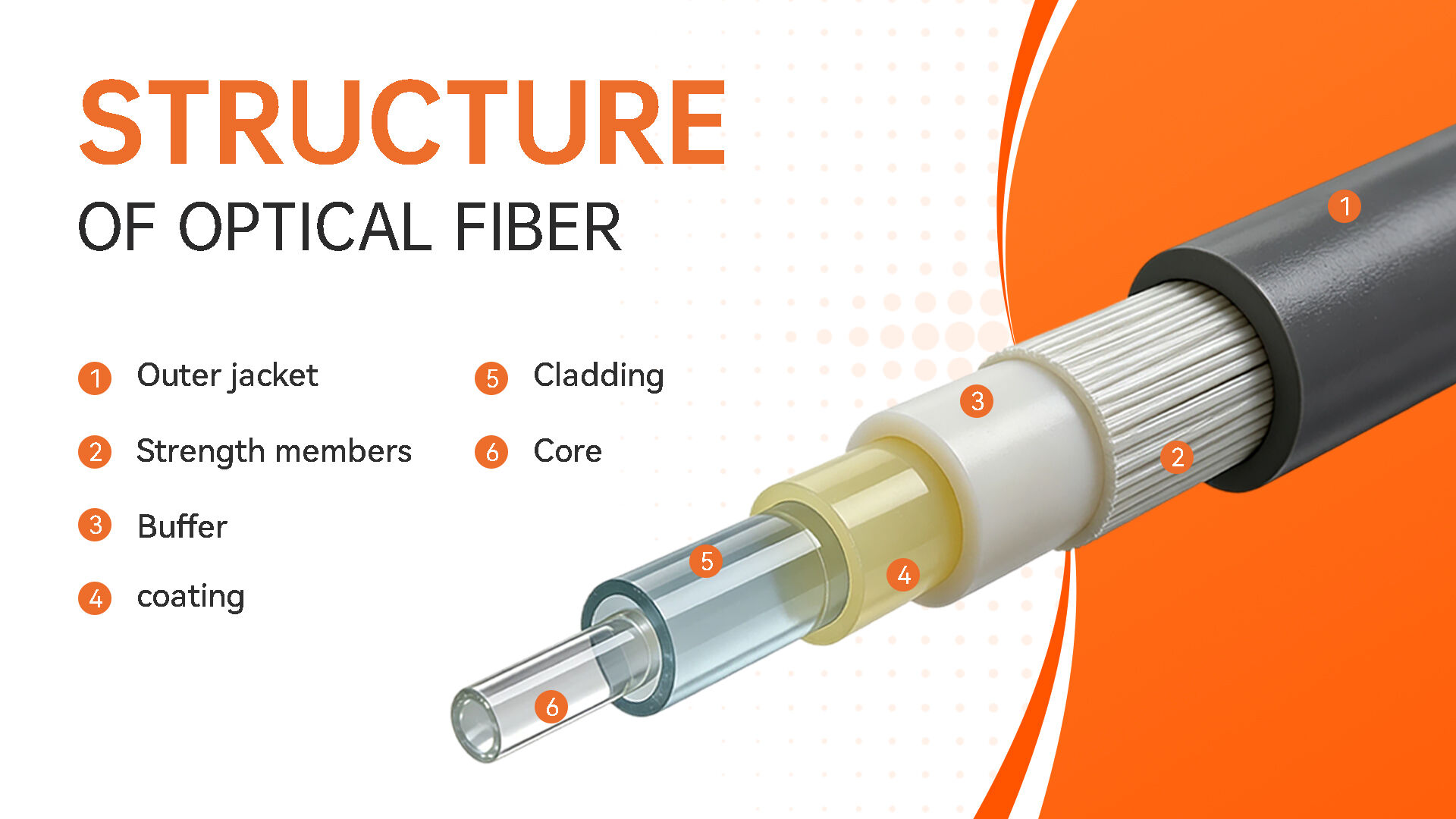
Aramid yarn and other reinforcing materials to strengthen the jacket structure; special coating layers; and fiber structures with better bend resistance.
These designs help reduce the impact of external mechanical stress on the internal optical fiber.
For applications that require frequent deployment, retraction, or redeployment, mechanical strength is especially important. If a fiber optic patch cord is repeatedly bent or pulled without sufficient mechanical protection, microbend loss may occur, which in turn affects optical performance.
5. Different Operating Temperature Ranges
Outdoor fiber optic patch cords typically need to cope with wider temperature variations than indoor ones. Outdoor equipment may experience significant day-night temperature differences as well as seasonal temperature changes. The operating temperature is -20°C~+70°C.
In contrast, indoor environments usually have more stable temperatures, so the temperature adaptability requirements for fiber optic patch cords are relatively lower. The operating temperature is typically about 0°C~+60°C.
6. Typical Applications of Indoor and Outdoor Fiber Optic Patch Cords
Different installation environments correspond to different product choices.
Indoor fiber optic patch cords are commonly found in: data centers, server rooms, ODF optical distribution frames, indoor communications cabinets, office networks, and indoor equipment connections.
A common feature of these applications is that the environment is relatively controlled, and the fiber is typically not exposed to sunlight, rain, or harsh weather for extended periods.
Outdoor fiber optic patch cords are commonly found in: 4G/5G base stations, outdoor communications cabinets, industrial communications networks, road monitoring systems, smart city equipment, outdoor sensor networks, temporary or mobile fiber connections, and more.
These scenarios often require dealing with both environmental changes and mechanical stress, so the overall performance requirements for fiber optic patch cords are higher.
When choosing fiber optic patch cords, base your selection on the usage environment, not just the connector and fiber type.
Before purchasing fiber optic patch cords, you can focus on considering:
Whether the installation location is exposed to UV radiation for extended periods; whether there is rain or a humid environment; the operating temperature range; mechanical stress; bending performance requirements; connector type; fiber type and optical performance requirements.
Reliable fiber connections start with the right product choice.
Whether indoor or outdoor, only by choosing fiber optic patch cords that match the actual environment can you provide a more stable and reliable connection for your fiber optic network.