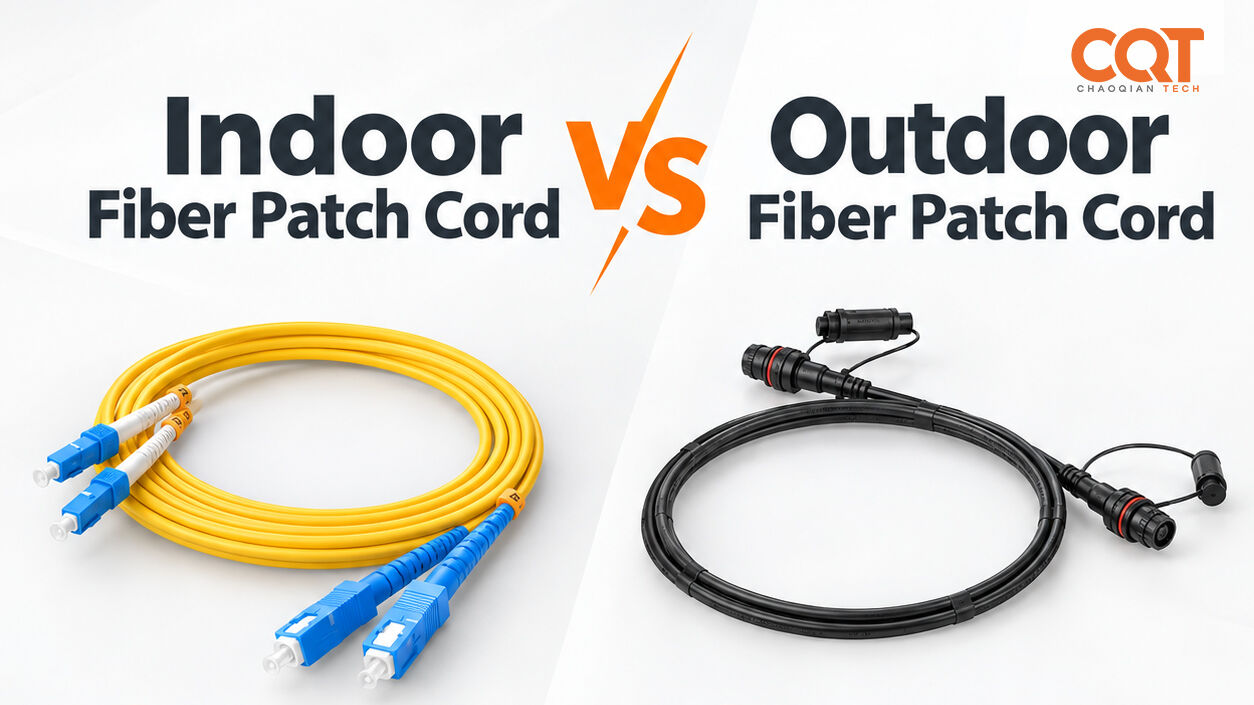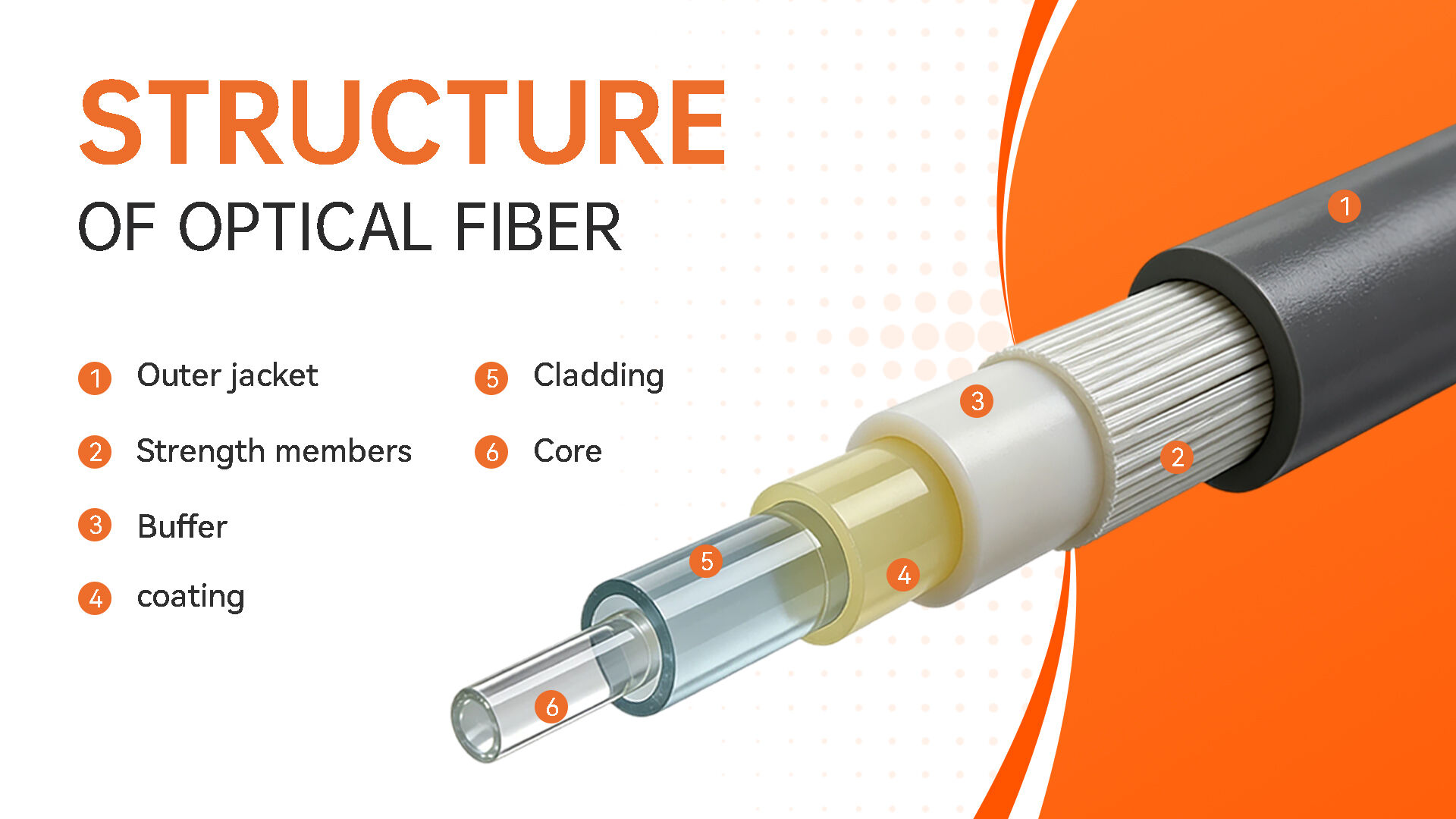
A Complete Guide to Choosing the Right Fiber Cable Solution
Fiber optic cables play a critical role in modern communication networks, supporting high-speed data transmission for telecom networks, FTTH deployments, data centers, and enterprise communication systems.
However, choosing the right fiber optic cable is not always easy.
One of the most common questions is:
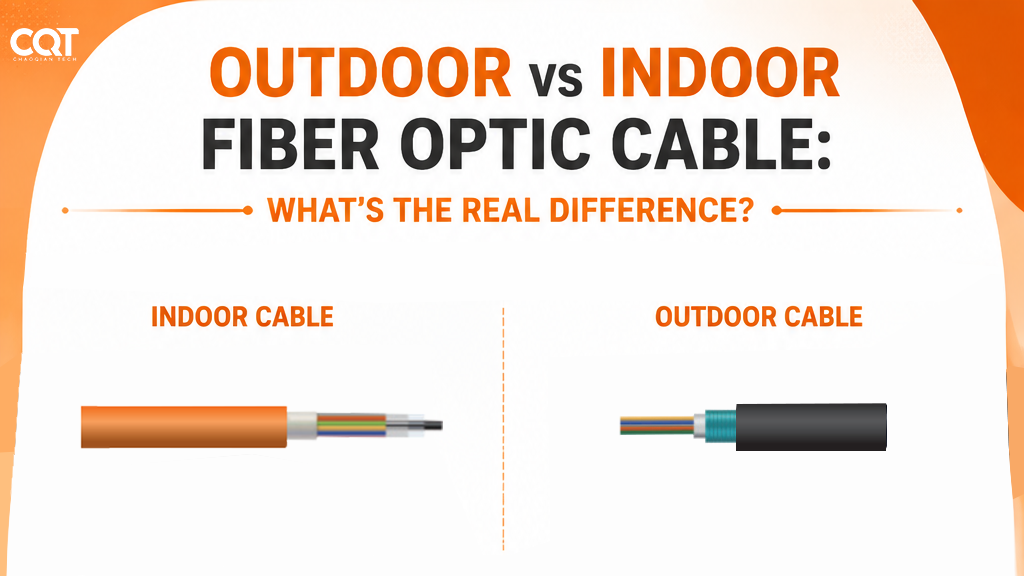
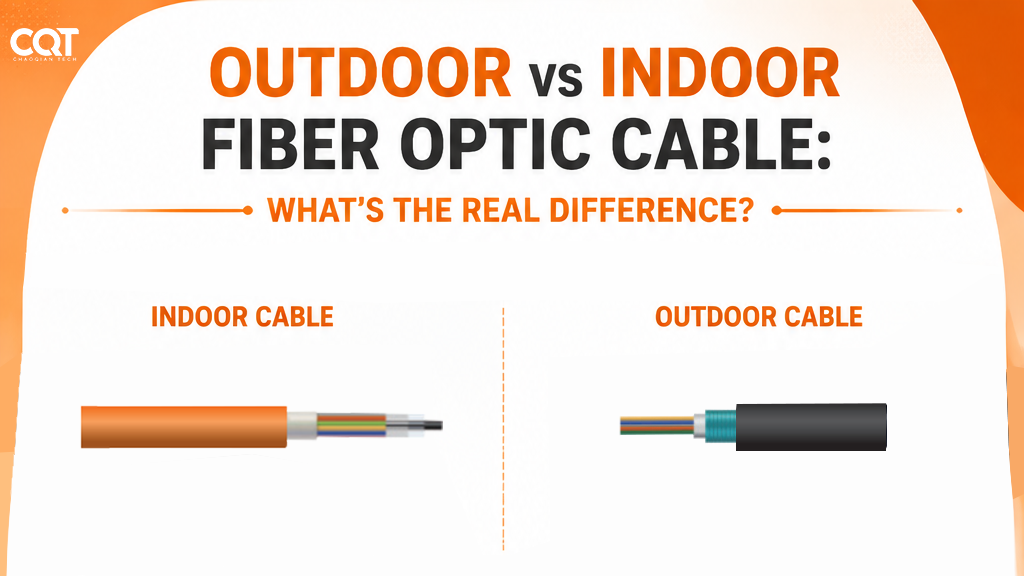
What is the real difference between outdoor fiber optic cable and indoor fiber optic cable?
Although both cables transmit optical signals, they are designed for completely different environments. Their differences mainly come from cable structure, protection performance, installation conditions, and application requirements.
What Is Outdoor Fiber Optic Cable?
Outdoor fiber optic cables are specifically designed to withstand harsh environmental conditions, including moisture, temperature changes, UV exposure, and mechanical stress.
These cables usually feature:
- Strong protective outer jackets for weather resistance
- Water-blocking materials to prevent moisture penetration
- Armored structures for additional mechanical protection
- UV-resistant materials for long-term outdoor deployment
Outdoor fiber cables are commonly used in:
- Telecom backbone networks
- Fiber-to-the-home (FTTH) deployments
- Underground fiber networks
- Aerial fiber installations
- Campus and metropolitan area networks
Types of Outdoor Fiber Optic Cables
What Is Indoor Fiber Optic Cable?
Indoor fiber optic cables are designed for controlled environments such as buildings, data centers, offices, and communication rooms.
Compared with outdoor cables, indoor fiber cables focus more on:
- Flexibility
- Easy installation
- Safety requirements
- Space-saving design
Key features include:
- Compact cable structure
- Low smoke zero halogen (LSZH) jackets for safer indoor use
- Easy stripping and termination
- High flexibility for routing inside buildings
Common applications include:
- Data centers
- Server rooms
- Office networks
- Building backbone cabling
- Fiber patching systems
Types of Indoor Fiber Optic Cables
1) GJX(F)H Butterfly Drop Cable
3) GJFJH/V Single-Core Round Cable
4) GJFJH/V Duplex Figure-8 Cable
5) GJFKJH/V Single-Core Spiral Armored Round Cable
6) GJFH/V Multi-Core Micro Cable
7) GJPFJH/V Multi-Core Cabling Cable
8) GJBFJH/V Multi-Core Breakout Cable
9) GJYX(F)CH Self-Supporting Butterfly Drop Cable
10) GJYFXJH Pre-Connected Cable
How to Choose the Right Fiber Optic Cable?
Before selecting a fiber cable, consider:
1. Installation Environment
Will the cable be installed outdoors, indoors, underground, or aerially?
2. Protection Requirements
Does the application require waterproof, armored, or UV-resistant protection?
3. Network Application
Consider whether the cable is used for FTTH, telecom backbone, data center, or enterprise networks.
4. Future Expansion
Choose a cable solution that supports future bandwidth requirements and network upgrades.
Different projects, completely different answers. Every network has its own unique conditions, and the best choice always depends on the specific environment and requirements.